
Solana Discord Token Gating: A Security-First Setup Guide
Learn how Solana Discord token gating verifies NFT or SPL token ownership, assigns holder roles, and updates access safely when holdings change.
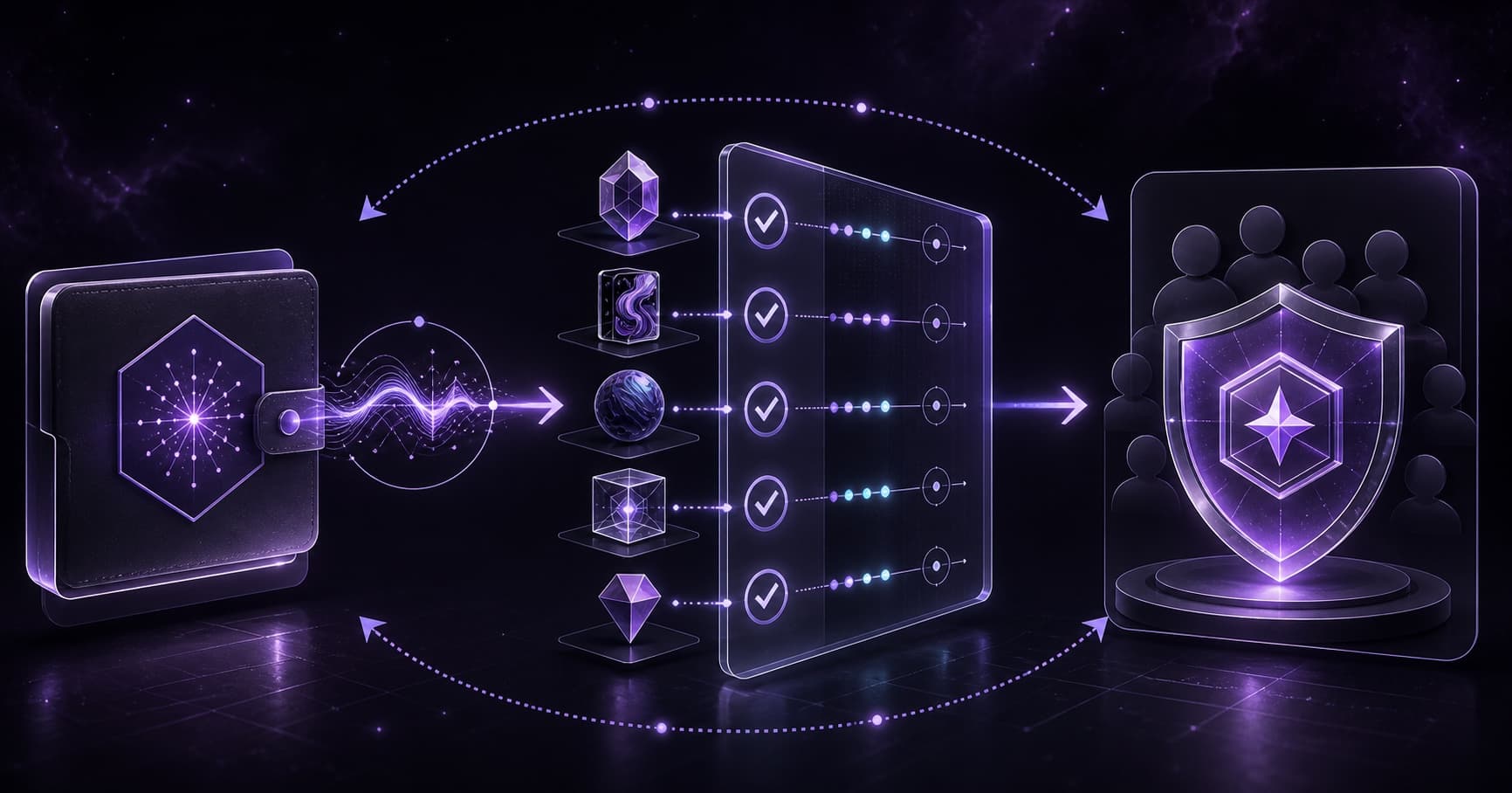
Solana Discord token gating connects verifiable NFT or token holdings to community access. The visible result is simple—a holder receives a role—but a reliable setup depends on several trust boundaries working together: wallet ownership, asset indexing, rule evaluation, bot permissions, and continued eligibility checks.
What Is Solana Discord Token Gating?
Solana Discord token gating is an access-control process that checks a wallet’s current on-chain assets and maps a qualifying result to one or more Discord roles. A community might admit every wallet that owns an NFT from a specific collection, reserve a channel for members holding at least 1,000 units of an SPL token, or create tiers based on quantity and traits.
The role is only the delivery mechanism. The actual authorization decision should happen outside Discord using canonical asset identifiers and a server-side policy. Discord then enforces the resulting channel permissions through its normal role hierarchy.
How Does Solana Holder Verification Work?
A defensible verification flow has seven distinct stages:
- Official entry point. The holder starts from a verification link published by the project on its website or a clearly identified Discord channel.
- Community identity. The holder signs in with Discord, or links Discord to an existing holder profile, so the result can be delivered to the correct member.
- Wallet proof. The wallet signs a unique, expiring message tied to the requesting domain and session. A legitimate proof does not require a token transfer or approval transaction. Solana documents the underlying message-signing pattern, while the Sign In With Solana specification defines a standardized authentication message.
- Asset lookup. A trusted server or indexer reads the supported holdings for the verified public key. Collection membership should be established from canonical metadata, not a display name or ticker alone. Metaplex’s Digital Asset Standard guidance shows how collection assets can be queried.
- Server-side rules. The platform evaluates the current evidence against the project’s NFT, token, quantity, attribute, or combined eligibility policy.
- Role delivery. A bot assigns only the mapped Discord role. Discord explains the underlying role hierarchy and channel permissions.
- Continued checks. The system re-evaluates eligibility after transfers or on a controlled schedule and removes only the access it owns when a holder no longer qualifies.
Keeping these stages separate makes failures safer. If an indexer is unavailable, for example, the verifier can return an indeterminate state instead of guessing that a holder qualifies—or revoking access on incomplete evidence.
What Can a Solana Community Gate?
The most useful policies are explicit enough that holders and administrators can predict their result.
| Rule type | Example | Evidence to verify |
|---|---|---|
| NFT collection | Own one verified collection asset | Canonical collection identifier and current owner |
| NFT quantity | Own three or more collection assets | Distinct qualifying assets in supported custody |
| NFT attribute | Own an asset with a specified trait | Normalized, trusted asset metadata |
| SPL token balance | Hold at least a stated amount | Exact mint, decimals, accounts, and current balance |
| Combined policy | Collection A AND token B; asset A OR asset B | A deterministic AND/OR rule with documented grouping |
Staked, listed, loaned, delegated, escrowed, or rented assets need special handling because the wallet’s visible balance may not reflect beneficial use. A verifier should support only custody arrangements for which it has reliable evidence. Unknown states should remain unknown rather than being treated as eligible.
How to Set Up Token-Gated Discord Roles on Solana
1. Define the access policy before installing a bot
Write the rule in plain language: which exact asset qualifies, how much is required, whether multiple linked wallets can be aggregated, when eligibility is rechecked, and what happens when the asset leaves the wallet. This becomes the contract between the community and its members.
2. Create Discord roles and private channels
Create dedicated managed roles such as Holder, Collector, or Council. Configure private channels against those roles, then test the server from a non-admin account. Avoid granting broad permissions simply because the role represents a valuable asset.
3. Confirm canonical asset identifiers
For an NFT policy, verify the collection or asset identifiers that the indexer actually uses. For an SPL token, verify the mint address and decimal handling. Names, symbols, artwork, and server nicknames can be copied; canonical identifiers are the basis of the rule.
4. Install the bot with least privilege
The bot normally needs to view the server, manage the roles it owns, and read the minimum information required for delivery. It should not receive Administrator unless the integration has a documented, unavoidable need. Place its managed role above the roles it must assign and below sensitive staff roles. Review Discord’s developer permissions reference when calculating the invite.
5. Configure identity and wallet verification
Use a holder flow that binds a Discord identity to a wallet through a unique signed message. The message should state the requesting domain and intent, expire quickly, and be protected against replay. A signature request should never be represented as an on-chain transaction.
6. Map the rule to a role and publish one official path
Map each policy outcome to its managed role, then publish one canonical verification URL on the project’s website and in a read-only Discord channel. Explain the qualifying rule, supported wallet conditions, permissions requested, expected refresh behavior, and the support route.
7. Test assignment, denial, uncertainty, and revocation
Do not stop after one successful holder test. Verification is an authorization system, so its negative and changing states matter as much as its happy path.
| Test case | Expected result |
|---|---|
| Qualifying wallet | The correct role is assigned once |
| Non-qualifying or below-threshold wallet | Access is denied with a useful explanation |
| Bot below the managed role | A clear configuration error is reported |
| Qualifying asset transferred away | Only the managed access is removed after recheck |
| Indexer or RPC unavailable | The result remains indeterminate; no guessed grant |
| Discord identity unlinked | No role is delivered to an unbound member |
| Unsupported custody arrangement | The limitation is disclosed instead of inferred |
Common Token-Gating Mistakes
- Treating verification as permanent. Holdings change. Access needs an intentional refresh and revocation model.
- Giving the integration Administrator. Most role delivery can operate with narrower permissions and a constrained role hierarchy.
- Gating by a display name or ticker. Human-readable labels are not unique asset identifiers.
- Scattering verification links. Multiple unofficial entry points make phishing easier and support harder.
- Hiding eligibility rules. Members should know what qualifies, how multiple wallets are handled, and when access can change.
- Removing unrelated roles. A token-gating service should reconcile only the roles and access states it owns.
Security Checklist for Discord NFT Verification
- Use one official verification domain
- Sign a unique, expiring message—not a transaction
- Bind the signature to the domain, intent, and session
- Verify canonical collection or mint identifiers
- Evaluate access rules on the server
- Grant the bot only required permissions
- Keep managed roles below staff and administrative roles
- Fail safely when RPC or indexer evidence is unavailable
- Recheck eligibility and handle transfers intentionally
- Record role changes without exposing sensitive wallet data
- Publish supported custody and multiple-wallet behavior
- Test from holder, non-holder, and non-admin accounts
Where MoonHold Fits
MoonHold separates the holder experience from the business workspace. Holders can link wallets and use a community’s verification path without entering an administrative console. Subscribed communities can configure NFT collection, token balance, quantity, attribute, and combined rules, then connect those results to managed experiences such as Discord roles.
You can learn how MoonHold works, see the Moonsters public community example, or open the business portal if you already manage a workspace.
Frequently Asked Questions
What does token-gated Discord mean?
It means access to a Discord role or channel depends on a current, verifiable asset rule—such as owning an NFT from a named collection or meeting an SPL token threshold.
Does wallet verification require a transaction?
No. A standard ownership check uses an off-chain message signature. A verification prompt that asks you to transfer assets, approve spending, or submit an unrelated transaction should be treated as suspicious.
What happens if I sell or transfer the qualifying NFT?
In a continuously enforced system, the managed role is removed after the next reliable eligibility check. The community should publish its recheck timing and grace-period policy.
Can a holder verify multiple wallets?
A platform may support multiple linked wallets, but the community must define whether balances are evaluated separately or aggregated. Every wallet still needs its own ownership proof.
Do staked or rented NFTs qualify?
Only when the verifier explicitly supports that custody model and can establish reliable evidence. Unsupported escrow, rental, or delegation states should not be guessed.
Why can’t the bot assign a holder role?
The most common cause is Discord role hierarchy: the bot’s managed role must sit above the role it needs to assign. Missing Manage Roles permission or an incorrect server installation can also block delivery.
Can the same eligibility rules work with Telegram?
The on-chain rule can often be reused, but identity linking and access delivery differ by platform. Each integration needs its own permission model, failure handling, and revocation tests.
Build access around proof, not assumptions
A good token gate is understandable to members, constrained in Discord, and honest about incomplete evidence. MoonHold gives holders and communities separate, focused paths for managing that verification lifecycle.